Friday, August 8, 2014

Photo Essay: Kenya Wildlife Amboseli National Park

Posted By Grit
By Marilyn Jones


Amboseli National Park in Kenya is known for its elephant population and other wildlife. What an unbelievable experience to be so close to these magnificent animals. Photos by Marilyn Jones.


A baby elephant between four and five weeks old

Cape buffalo and egrets

A baby elephant between four and five weeks old


To view all 10 photos, click here.


Thursday, August 7, 2014

Brother Vellies Designer Aurora James's Photo Diary from Kenya

Published on Vogue.com

Aurora James has been traveling to South Africa since she started her sustainable New York–based shoe label, Brother Vellies, and made a brief pitstop in Kenya on one of her many production trips to the region. It was there that she was inspired to create the latest addition to her label, the Tyre sandal, a style based on the footwear of the Maasai which is made from repurposed car tires. Here, the model agent turned designer shares a photo diary of her return voyage to the country earlier this month, including a behind-the-scenes look at the artisanal workshops in Nairobi where the shoes are made by hand and a camping expedition on the sweeping plains of Kenyan nature reserve Maasai Mara.


A person’s collection of books speaks volumes about them. I always love browsing Paul and Penny’s collections at their space, Ngong House, in Nairobi.


The voodoo practices and rituals in Benin fascinate me. A lot of my references for spring 2015 come from images of the annual festivals they hold there.


My boyfriend and I stayed overnight in a tent at the Maasai Mara for three nights at Sala’s Camp. Through all of my trips to Africa, this was the first time I’ve ever been on safari. These lions were getting in a supreme cat nap at dusk.


One of the seven different flights involved during my two weeks in Kenya. Here I am having my Gone with the Wind moment dressed in a look by New York design duo William Okpo.


A visit with an artisan we work with. His workshop is in Kibera, one of the largest slums in Nairobi and home to over 1 million people, much of whom are unemployed. Out of this place he creates some of the most beautiful things I have ever seen. This season he hand-carved over 500 beads for us from bone.


Incorporating hand-worked brass, bone, and horn into spring 2015. His daughter likes to sit in on all design meetings to approve.


This is my first season working with Nile perch. Most fish leathers are by-products of the edible fish industry. It’s a great sustainable leather to source from local farmers in Kenya.


My Ngong House treehouse in Nairobi. The most tranquil hideout.


An orphan rhino at the David Sheldrick Wildlife Trust. I couldn’t leave here without adopting the sweetest orphan elephant, baby Sokotei.


Giraffe Manor is easily one of the most magical places in the world. It’s home to a couple dozen of the endangered Rothschild giraffes as well as the unsung heroes of Giraffe Manor, the warthogs.


Tea time at the Manor.


Hellen the giraffe was my constant companion during our stay.


Getting ready to board our flight to Lamu and Malindi. This airport always feels a thousand world’s away from the hustle and bustle of JFK.


On the coast, we use local tuk-tuk vehicles to get around. They’re basically motorcycles with cabins. This is my view from the tuk-tuk whizzing by the local shops in town.


First order of business at the workshop: summer sandal reorders. Our Tyre sandals utilize recycled car tires for the soles and are based on a style the Maasai people wear. This style was the basis of me deciding to move our production to Kenya.


My personal favorite tuk-tuk in town.


Our women artisans at the workshop. They hail from a variety places in Kenya and are a mix of different tribes, ages, and religions.


The views on Kenya’s coast consistently provide the best beach picnics in the world.


A Maasai friend in our checkers Tyre sandals. We talk a lot about their traditions and the education issues in the Maasai Mara where they hail from. With Brother Vellies we hope to set up an initiative to help expand the education opportunities for children growing up in the Maasai Mara.


After a ton of hard work on everyone’s part, our production is a wrap! This is a shot of one of our women carrying out our Moda Operandi order. Those sandals, along with our new collection, begin their long journey back to New York City and into the hands of our amazing customers.

Wednesday, August 6, 2014

Your Adventurous Bucket List for 2015 - Go Crazy!

Published on Yahoo! Travel 

We all know the early bird gets the worm and everyone likes to be first. So we decided to bring you the emerging destinations that everyone will be talking about (and adding to their bucket list) next year. These are vacations for the adventurous spirit in all of us. Full of history, UNESCO sites, and rich culture, these countries are still relatively undiscovered by the hordes. In many, development has yet to take over and you can still see and experience how locals lived hundreds of years ago. Book your tickets now before the crowds come and the costs double!

Kenya

The year 2015 is a great time to take a fresh look at Kenya. Travelers can visit the pristine and secluded Loita Hills in an untrammeled corner of the Rift Valley, an exclusive trip offered by Mountain Travel Sobek. They will hike among unexpectedly lush terrain, replete with plunging waterfalls and spectacular vistas, led by genuine, local Maasai guides. Who doesn’t want to see big game — elephants, rhinos, lions, leopards, and zebras?

Monday, August 4, 2014

Ahead of the Game in Kenya

Published on UT San Diego


A giraffe strolls through the golden savanna of Kenya’s Masai Mara game preserve. More than 90 species of animals live in the sanctuary. Norma Meyer
Hakuna matata, no worries — hah! Our windowless Land Cruiser was parked in the midst of 14 — count ’em, 14 — canine-fanged razor-clawed lions, so close I could see every gnat on their tawny, bone-crushing bodies.

A king of beasts slowly got up, slinked by within a hair of our vehicle’s side, then plopped down in the cool shade of the front bumper. Other members of the female-led pride playfully piled atop one another, licked each other’s faces and stretched on their backs like lazy house cats.
“They’ll soon hunt for dinner,” said our safari guide Ping. Ohhh boy.

We were in Kenya’s far-famed Masai Mara game preserve, an out-of-this-world Animal Planet of trotting zebras, thundering elephants, stick-legged giraffes, unsightly wildebeests, graceful gazelles, scampering baboons — in all 90 spellbinding species. Until you’ve gawked at tartar on a lion’s choppers, it’s hard to believe marauding carnivores don’t ingest camera-pointing Homo sapiens in safari trucks. Once we stopped within 10 feet of a massive male lion, his mane gorily matted with crimson blood and guarding his freshly killed meal of a half-ton hippo. His piercing yellow eyes fixed on us. Then he yawned. Whatever.

An excursion through the Masai Mara game preserve in Kenya gets you up close to lions and many other wild animals. Norma Meyer
Nothing preps you for the heart-racing, heart-melting, awe-striking adventure of a lifetime in the primal wild. To be vastly outnumbered by thousands of extraordinary creatures, all communicating with each other on unspoiled golden savannas. I turned to blubber when a days-old elephant nursed its protective mother after the two carefully plodded across a stream.

My Kenya trip also threw open my eyes on a human level: In another region, I visited a Masai village where traditionally garbed “warriors” and their families live in cow-dung huts and the women walk hours with jugs on their heads searching for water to drink. Nearby, a rural medical clinic treated perils of bush life — like getting stomped by elephants sharing the trails home.

SAFARI THRILLS
“Don’t move. The female looks agitated,” warned Ping, who had a knack for tracking big cats and a nasty scar rippling down his bald scalp from being attacked by a Cape buffalo while on foot.

Lions can run 50 miles per hour; I was standing upright a pounce away in an open-air 4-by-4. This time, we were enjoying a happy hour “sundowner,” sipping cocktails out of silver chalices while studying a fascinating mating-hopeful male and uninterested quest, both resting in the grass. Normally, lions perceive safari vehicles as unthreatening rectangular units — staying still as Ping advised kept it that way. Soon, as if on cue, the noble duo simultaneously belted out throaty roars, rattling the acacia-dotted terrain.
 
A mother elephant nurses her days-old baby on the Masai Mara game preserve in Kenya. Norma Meyer
Ping was our crack animal-intuitive guide from Mara Plains Camp, a seven-tent oasis in a people-sparse wildlife-teeming conservancy on the edge of more tourist-trodden Masai Mara Reserve. What’s supercool is camp guests get free use of $4,000 worth of photo equipment — a Canon 7D camera and 100 mm-400 mm telescopic lens — along with $2,200 Swarovski binoculars. I did my safari in low-season spring; from July to October crowds descend for the world-famous annual Great Migration, a phenomenal stampede of 2 million wildebeests, zebras and gazelles rampaging through the Mara (with salivating predators in tow).

Having a front-row seat in nature’s raw dramatic theater throws your emotions into overdrive. Just after dawn, we mesmerizingly watched a majestic spotted cheetah with her beautiful cub, their ears cocked, gazes intent, surveying the plains from a termite mound.
 
A mother cheetah and cub share quality time before hunting for dinner on the Masai Mara. Norma Meyer
Off in the far distance, a herd of Thomson gazelles — so cute, they look like mini-deer — grazed with their offspring. (No, please no…) Then it happened. Our off-road vehicle crazily gave chase as land’s fastest mammal, with cub close behind, madly tore across hills and while terrified prey sprinted for their lives, efficiently took down a gazelle fawn. With cub prancing next to her, the panting mother cheetah carried the kill by the throat in her mouth — ditching two scavenging jackals — and set it down in tall grass. Then as she maternally stood sentry, her hungry youngster frantically devoured lunch, even crunching the bones. (This is where I kept telling myself, “circle of life, circle of life…”)

At night, I lay in bed in my remote spacious tent, hypnotically listening to wildebeests loudly grunt and hyenas cackle. Like all guests, I was told not to leave my quarters after dark; if I needed to come out, I yelled, “Jambo! Jambo!” (“Hello! Hello!”) to night watchmen patrolling for four-legged party-crashers. I also, comically, was armed with a colossal orange horn to blow in case a beast barged through my floor-to-ceiling zip-up screens. The camp manager assured the last time someone sounded the alarm “15 naked Masai warriors came running with spears.” Now, that’s wild.

TRIBAL VISIT
In their primitive village of mud-stick-and-cow-dung huts, the Masai women greeted us by gleefully singing, dancing and grabbing our hands to join in. Their necks were encircled by decorative dinner-plate-shaped beaded necklaces, their bodies draped in multicolored sheets (called kangas) and their feet swaddled in sandals crafted from recycled tires. Their elongated earlobes bore huge stretched holes. Slender young men, wrapped in intricate beaded jewelry and red-checked blankets (shukas), exuberantly jumped in the air, a competitive festive ritual. Barefoot children, with baby goats tagging alongside, were most excited to see images of themselves on my camera.

This village, Ngabolo, was in Laikipia, more than two hours from the Mara via a 16-seat bush plane that lifted off from a dusty strip and soared over menageries of zebras, wildebeests and topi antelopes. In both the Mara and Laikipia, tourists can arrange to visit Masai settlements for a pounds-everything-into-perspective cultural experience (you’ll smack the next American who gripes about slow Wi-Fi). A gentle Masai named Isaac took me into his round thatched hut that had softball-sized gaps as “windows” and was so smoky I choked. It was dark inside, but when my eyes adjusted, I saw his wife cooking over an open fire. Next to her, their toddler son hysterically cried. Isaac said the scared boy had never seen a white person.
 
The Masai people, such as these women, have clung to their tribal traditions. The women live in a village in the Laikipia region of Kenya. Norma Meyer
I learned about the hard life of these humble women — they build the houses, collect firewood, search for water, milk cows and tend to children. A seminomadic tribe, the men herd cattle whose numbers represent their wealth. (Our Masai guide described a cow as “an ATM machine” since it can buy you goods.)

Classes weren’t in session, but we later stopped at the village’s new primary school, cheerily emblazoned “Education For A Brighter Future” and supported by The Sanctuary at Ol Lentille, a high-end do-gooder eco-lodge that immerses guests in the Masai community. Ol Lentille also helped build a rural hospital that still needs equipment. This day, a medical mission of UCLA nurses treated wary villagers, bedecked in traditional beaded jewelry and frightened to even have their blood pressure taken. A 2-year-old had been severely burned in his hut, a man writhed on the floor with appendicitis pain, and an ailing tuberculosis patient occupied the lone hospital bed.

“People here live in bushes. We saw a man where a giraffe had stepped on his back,” said the hospital’s only doctor, locally born Alfred Saigero. “In the last four months, we’ve had five people with elephant injuries.”

Nearly 300 miles away on the wide-open Mara, elephants roamed sun-dappled plains, seemingly oblivious to vacationing voyeurs in safari trucks. I had sacredly stared at scores of tusked behemoths, their precious offspring huddled nearby raising snorkel-like trunks and flapping Dumbo ears.

But in Laikipia’s wilderness, parades of pachyderms trek twice daily to the dam to drink water, using the same paths as the Masai. “Some kids walk six miles to school,” Saigero said. “If they see the elephants coming toward them, they have to turn and run back.”

IF YOU GO
Traverse a rustic swing bridge to enter all-inclusive Mara Plains Camp, a seven-tent luxury retreat on the wildlife-abundant Masai Mara. Enjoy gourmet cuisine near the campfire with amazing hosts Amy and Shaun, then soak in your tent’s copper bathtub. Rates from $956 a night per person include game drives, guides, meals, alcohol, laundry, airstrip transfers, park fees, photo equipment use. Stay three nights and get free round-trip airfare from Nairobi to the Mara (a $400 per person value). www.greatplainsconservation.com.
Teetering on a panoramic hilltop, the all-inclusive Sanctuary at Ol Lentille in Laikipia offers four unique villas, including the arabesque Sultan’s House. You’ll see and hear trumpeting elephants in the valley below. Owner John Elias, a talkative Brit, fills you in on local Masai projects (which your tab helps fund). Rates from $925 a night per person include game drives, guides, meals, alcohol, personal butler, laundry, massages, visit to village schools and hospital. Extra donation for village visit, www.ol-lentille.com.
• Kenya’s official website, www.magicalkenya.com.

Thursday, July 31, 2014

10 Secret Beaches Worth Discovering

Published on CNN

(CNN) -- To all the locals who have been hoarding the following beaches, please forgive us.

But c'mon, how can you really sleep at night, knowing you're sending all those well-meaning tourists to the same old beaches with the same old towel-to-towel crowds, the same old overflowing trash cans and the same old high-rise hotels blocking the view?

Is it really fair that you keep these gifts from Mother Nature all to yourself?

So, yeah, the jig is up.

As for the rest of you, you can thank us later.

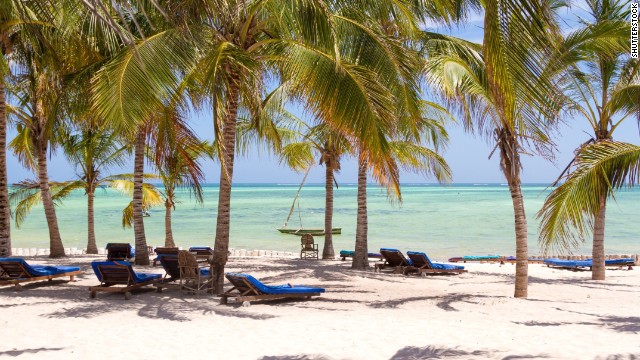
Watamu Beach
Kenya

There are five main reasons you've never heard of this wide, idyllic beach on the Indian Ocean: lions, elephants, rhinos, leopards and buffalo.

Most tourists associate Kenya with safari and the Big Five. But with some 330 miles of Indian Ocean coastline, that's a gross oversight.

Granted, it's a long flight just for a beach, but why not combine a week at a Maasai Mara safari camp with one of the most interesting spits of sand on the continent?

Watamu offers all the normal sandcastle building opportunities, but there are also other unique local attractions including Watamu Turtle Watchconservation programs and the 13th century Gede ruins. Excavations of the ruins of this ancient Swahili trading village have turned up beads from Venice, a Ming vase from China, lamps from India and scissors from Spain.

And, if you're still jonesing for animals, Gede ruins are home to a troop of friendly Skye monkeys, and the Watamu Marine National Park boasts some of East Africa's best coral.

The largest spitting cobra (Naja ashei) in the world was also discovered here in 2007.


Wednesday, July 30, 2014

Save the Animals: David Chancellor's Powerful Photographs of Conservation Efforts

Published on Time Lightbox


It is a last kindness. A man in camouflage takes out a knife and severs the horn of a rhinoceros, depriving the animal of its most iconic feature. The poachers who have killed this animal have fled, leaving behind their prize: the keratin that makes up the horn. It’s a substance so valued for its use in traditional Asian medicine that rhinos are being slaughtered by the thousands for it. Severing the horn will keep it off the black market. Even in death, the animal must be maimed to be saved.

That’s a measure of just how dire the present has become for the rhinos and elephants of Africa. After years of relative calm, trafficking in species like elephants and rhinos doubled from 2007 to 2013, largely to meet the growing demand for ivory and other animal products from the rising consumer class of Asia. By some estimates, wildlife trafficking is the fourth-largest international crime, carried out by global criminal syndicates for whom the trade is almost as lucrative as drugs but far safer. There’s even evidence that poaching now fuels terrorism—militant groups like Somalia’s al-Shabab derive a portion of their income from wildlife trafficking.

But in the face of loss, there are those who fight back. David Chancellor’s photographs document the work of the Northern Rangelands Trust, a Kenya-based NGO that has helped community conservancies learn to protect the wildlife they live alongside. Sometimes that means protecting people, as when an ornery elephant is relocated to reduce human-animal conflict. But often it’s a hard, dangerous battle against wildlife trafficking. As many as 1,000 park rangers have been killed in battles with poachers over the past decade. On the black market, slaughtering animals will always pay better than preserving them.

Yet Chancellor’s subjects soldier on, fighting to protect beings that cannot protect themselves. 

What to Expect on Your First African Safari

Published in USA Today


I had never been to Africa before in all my years of traveling, and never on a safari. I'm not sure why. Was it the vaccinations, the visas or the long flights to Nairobi?


I was to travel to Kenya and Tanzania with Micato Safaris. Before the trip I was deluged with information (Micato is the most detail-oriented travel company I've encountered). Brochures. Pamphlets. Packing lists. Would we really be sleeping in tents? Flying in single-engine planes and landing on grass fields? It was all a bit daunting.

I read all the information twice, but as it turned out, nothing prepared me fully for the actual experience. Here are some of the things I found most surprising, and perhaps they'll help you if you're contemplating a similar trip one day.

You don't need to bring a lot of anything

You really need very little, so my advice is to take half (or less) of what is suggested by your safari outfitter's packing list. The brochures make it clear that because you'll be flying in small planes between camps, you need to limit the weight of your luggage to 33 pounds. In truth, no one ever weighed a single bag, and the heaviest items in my luggage were cameras and lenses. Every lodge and campsite on the trip offered professionally done-the-same-day laundry, included in the price. In fact, you could get by with what you wear on the plane and two changes of clothes, period. I brought four changes and frankly, I overpacked, since I availed myself of the laundry services each day. Save room in your bag for lots of camera equipment (a backup camera is a good idea, in case one breaks), batteries, lenses and so forth. Do, however, avoid bright colors (tsetse flies love blue for some reason). Khaki and tan are the way to go, even if they're not your colors.

You'll get close to the animals. Really close

Of course you expect to see all sorts of animals in the wild. That's what a safari is all about. But you'll sometimes be mere feet away from elephants, zebras, lions, hippos and other game. Do not get out of your Land Rover to get any closer. The animals won't like it. And neither will your guides.

Luxury accommodations in a tent

Sleeping in tents is not what you think. Yes, some camps consist of canvas-clad tents, but they're deluxe tents, with firm mattresses, hot and cold running water, exemplary service, fine furnishings, and thoughtful touches everywhere.

Since I only stayed in camps and lodges approved by Micato, I can't vouch for the entire industry, but the level of luxury was a shocker, even though the pamphlet does mention that, "the luxury of the tented camps is always a wonderful surprise." I was expecting to be roughing it a bit more. I've stayed in five-star hotels that weren't as comfortable or luxurious. There were deep tubs, gushing showers and four-poster beds with deluxe linens. And of course, the views were incomparable.

We stayed at two places in Kenya: Elewana Sand River Camp in the Maasai Mara and Olare Mara Kempinski. We then went on to Tanzania to the Elewana Pioneer Camp in the Serengeti National Park and the Singita Grumeti Reserves, a 35,000-acre private game park, where we lodged at the Singita Sasakwa Lodge in private cottages (I could write a book about Singita Sasakwa and how over the top it is; the bathrooms were larger than my Manhattan apartment).

Each one was more luxurious than the next. "Pioneer Camp" evoked images of roasting game over a campfire or something, but nothing could be further from the truth.

Gourmet cuisine in the wild

And speaking of luxury and under-promising, there was nothing in my tour operator's "Planning Information" booklet to suggest the range and quality of the cuisine we'd be enjoying. For dinner, all it says is you get a "sit-down, three-course meal" although it does mention "fruits and vegetables grown locally on small family farms, making the produce on safari especially fresh and delicious." But it was incredible how, in the middle of nowhere, the camp and lodge chefs were able to create delicious gourmet meals for breakfast, lunch and dinner, expertly served along with fine South African wines. Oh, and as it turned out I needn't have worried about food-borne illness, despite the warnings of my doctor who prescribed travel medicine. I ended up tossing the unused antibiotics and stomach remedies he prescribed on my way out of Nairobi Airport—another pleasant surprise.

You'll love the people

The Micato brochure stated, "Travellers generally travel to Africa for the love of the wildlife, but return home in love with the people." Of course, this sounds like every other travel brochure, right? Aren't all locals friendly in the brochures? But no copywriter could adequately describe how warm the East Africans I met are. I've traveled everywhere, and I've never felt so welcomed. In every camp and hotel, at the airport, in the villages we visited, they are simply the warmest, most accommodating people I've ever encountered.
One illustration: I bring my own pillow when I travel and my tent attendant at Pioneer Camp noticed that the pillowcase was worse for wear after a week in the bush. Without being asked, he hand washed it and hanged it up to dry. Even in a Four Seasons, no maid has ever done that for me. These people are simply delighted to have you as their guest.

You may get to visit a slum

That's true no matter where you go, but this was the biggest surprise of all. On our last day, Micato brought us to a Nairobi slum where the company has been involved for years by investing in the lives of the people living there. A portion of your safari cost goes into these projects. It was an eye-opening experience for sure.

Looking back, I was pretty foolish not to jump at the chance of experiencing all this. But I'm glad I did. And would do it again without hesitation.